Britain's Betting Booms: Fresh Casino Trends Gripping the High Street and Online
12 Apr 2026
UK Gambling Commission Issues Updated AML Guidance Targeting Casinos with Money Service Businesses

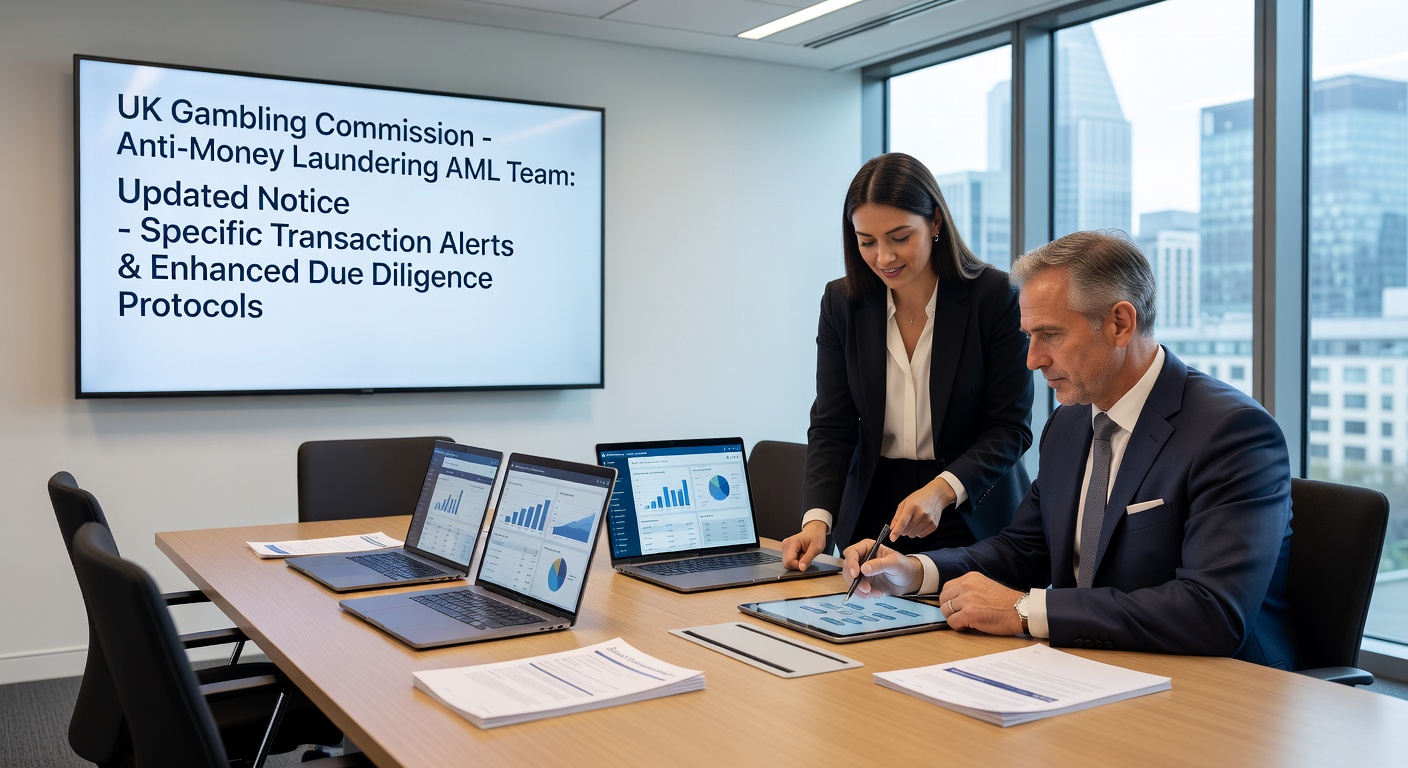
The UK Gambling Commission's Anti-Money Laundering (AML) team rolled out a pivotal update on 26 March 2026, zeroing in on casinos that double as providers of money service businesses; this revised notice lays out clear directives for operators to sharpen their compliance with AML regulations, especially when handling such financial services within gaming floors.
Breaking Down the Latest Notice
Casinos offering money service businesses—think currency exchanges, cheque cashing, or wire transfers—now face refreshed instructions under this guidance, which builds directly on the Commission's ongoing push to fortify defenses against illicit fund flows; released just three days after an AML update on digital identity verification for casinos on 23 March 2026, the timing underscores a rapid-fire response to evolving risks in the sector.
Experts tracking regulatory shifts note how the notice spells out enhanced due diligence steps for these operations, requiring operators to map customer interactions more rigorously, particularly where high-volume cash handling intersects with gaming activities; data from prior Commission reports highlights that such services have drawn scrutiny because they can serve as gateways for laundering schemes, blending legitimate play with suspicious transactions seamlessly.
What's interesting here is the emphasis on risk assessments tailored to money services; casinos must now integrate these into their broader AML frameworks, documenting how they monitor for red flags like unusual transaction patterns or mismatched player profiles, all while aligning with the Money Laundering Regulations 2017 as amended.
Context Within Recent AML Evolutions
This update slots into a sequence of targeted advisories from the Gambling Commission, where the digital identity guidance from 23 March already urged casinos to leverage advanced tech for verifying remote and on-site patrons amid rising online threats; together, these moves signal regulators' focus on layered protections, ensuring physical venues don't become blind spots in the fight against financial crime.
Observers point out that money service businesses within casinos have long operated under the radar, yet figures from enforcement actions reveal they've accounted for notable fines in past years—take one case where a major operator paid out millions for lax controls on cash-heavy services, prompting this kind of prescriptive refresh.
And as April 2026 unfolds, licensees report scrambling to audit their setups; early compliance checks show many venues tweaking policies on the fly, with training sessions ramping up to drill staff on spotting layered laundering tactics that exploit gaming anonymity.
What Counts as a Money Service Business in Casinos
Under the notice, money service businesses encompass any facility where casinos facilitate fund transfers, foreign exchange, or similar dealings for patrons; this includes kiosks handling traveler's cheques or even partnerships with third-party providers embedded in lobbies, services that thrive on the high-traffic, cash-rich environment of gaming floors but also amplify vulnerability to abuse.
Research into laundering typologies, as cited in Commission publications, indicates these operations often feature in schemes where criminals convert dirty money into chips, play minimally, then cash out clean funds; the updated guidance counters this by mandating enhanced customer due diligence (EDD) for high-risk clients, coupled with ongoing transaction monitoring that flags deviations from normal patterns.
But here's the thing: smaller venues offering basic cheque cashing might find the requirements straightforward, whereas larger chains with international clientele face steeper hurdles, needing to prove robust systems for source-of-funds verification and politically exposed persons (PEP) screening.
Key Compliance Directives and Tools
The notice outlines practical steps like appointing dedicated AML officers for money services oversight, conducting periodic independent audits, and maintaining detailed records for at least five years; it also stresses staff training on behavioral indicators, such as patrons avoiding gaming altogether while using exchange services, a classic tell in laundering playbooks.
Turns out, technology plays a starring role too; casinos get nudged toward automated tools for real-time screening against sanctions lists and adverse media, integrating these with their player management systems to create a unified risk profile that spans gaming and financial arms.
One study from regulatory analysts reveals that operators who've implemented similar upgrades post-fine saw suspicious activity reports (SARs) drop by up to 30%, underscoring the payoff; yet challenges persist, especially for legacy systems struggling to mesh casino databases with AML software.
So in April 2026, as the dust settles from the March releases, industry forums buzz with operators sharing templates for risk matrices, while consultants roll out crash courses tailored to the notice's nuances.
Broader Implications for the Casino Sector
This guidance doesn't exist in isolation; it ties into the Commission's Licence Conditions and Codes of Practice (LCCP), where non-compliance risks licence revocation or hefty penalties, as evidenced by recent enforcement tallies showing AML lapses topping violation charts.
People who've navigated past updates often discover that proactive alignment pays off, with venues conducting gap analyses against the notice finding quick wins in policy tweaks; larger groups, for instance, leverage central compliance teams to standardize across sites, streamlining what could otherwise be a patchwork headache.
That's where the rubber meets the road for international operators too, since the rules dovetail with global standards from bodies like FATF, ensuring UK casinos stay ahead in cross-border scrutiny; and with digital wallets proliferating, the notice hints at future expansions, previewing how crypto-linked services might trigger even tighter controls down the line.
Noteworthy is the collaborative tone; the Commission consulted stakeholders pre-release, incorporating feedback on practical burdens, which explains why the language balances firmness with feasibility—operators appreciate directives that clarify rather than overload.
Industry Reactions and Next Steps
Trade bodies like the British Casino Association have welcomed the clarity, with spokespeople noting it equips members to fend off opportunistic criminals more effectively; early adopters report integrating the guidance into quarterly reviews, using it to benchmark against peers and refine internal audits.
Yet the writing's on the wall for laggards: the Commission signals ramped-up inspections through 2026, focusing on high-risk sites with money services, backed by data showing elevated SAR filings from casino sources in recent quarters.
Now, as spring 2026 progresses, casinos balance these mandates with customer experience, deploying subtle measures like discreet ID checks at exchange points to maintain flow without friction; those who've piloted such approaches find player tolerance high when transparency reigns.
Conclusion
The 26 March 2026 AML notice from the UK Gambling Commission marks a sharpened focus on casinos' money service businesses, weaving enhanced safeguards into daily operations while echoing the digital identity update that preceded it; operators adapting swiftly position themselves against regulatory headwinds, fostering environments where legitimate play thrives amid fortified barriers to crime.
With April 2026 bringing initial compliance waves, the sector watches how these rules reshape risk landscapes, potentially setting precedents for broader financial oversight in gaming; stakeholders emphasize that staying vigilant turns compliance from burden to bedrock, ensuring the industry's integrity endures.