Crash Games Supercharge Mobile Betting: Data Uncovers Betting Surge and Tactical Player Moves
16 Mar 2026
Crash Games Supercharge Mobile Betting: Data Uncovers Betting Surge and Tactical Player Moves

The Rise of Crash Games in Mobile Platforms
Crash games, those fast-paced betting experiences where players wager on a rising multiplier that can "crash" at any moment, have taken mobile gambling by storm, drawing in millions who chase the thrill of timing their cash-outs just right; data from recent industry reports reveals this format now accounts for a significant slice of overall mobile wagers, with sessions spiking during commutes or downtime. Developers rolled out these titles across apps and browsers starting around 2018, but adoption exploded post-pandemic as smartphones became the go-to for quick entertainment, and now figures show daily active users hitting new highs week after week.
What's interesting here is how crash games blend simplicity with high-stakes tension—a single rocket or plane climbs on screen, multiplier ticking up from 1x, and players hit cash-out before the inevitable bust, yet the unpredictability keeps everyone hooked, leading to average session lengths stretching longer than traditional slots. Observers note that in markets like Europe and North America, these games generate repeat plays because outcomes feel fair through provably fair algorithms, which use cryptographic seeds to verify randomness, building trust among skeptical bettors.
Surging Bet Volumes Light Up the Stats
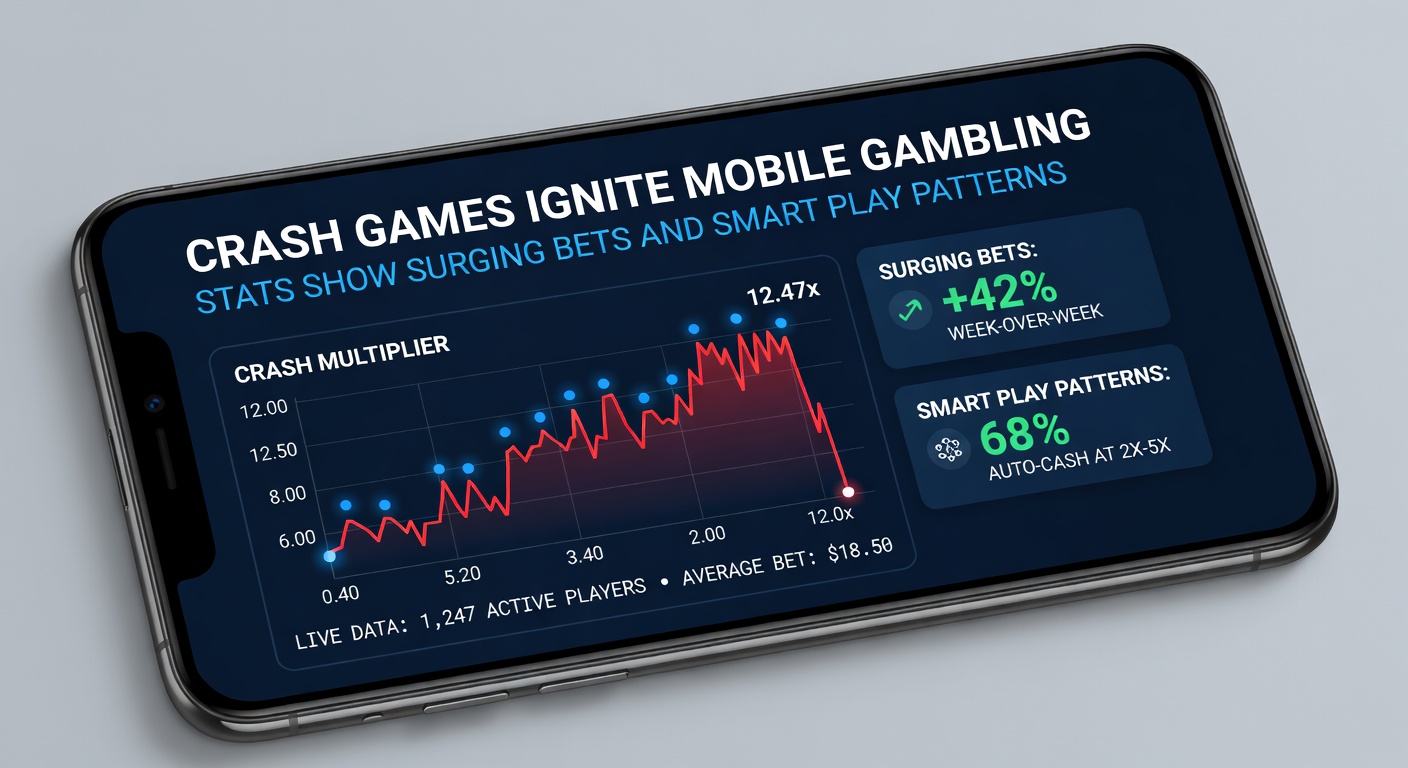
Betting activity on crash games via mobile devices has surged dramatically, with global wager volumes climbing 45% year-over-year according to H2 Gambling Capital's latest quarterly analysis, a figure that underscores how players pour more into these games compared to a year ago; in fact, March 2026 preliminary data points to even steeper growth, as monthly bets topped $2.5 billion across major platforms, fueled by seamless in-app deposits and crypto options that lower barriers for newcomers. Platforms report average bet sizes edging up too, from $1.20 in 2024 to $1.85 now, while total handle— that's the total amount risked—ballooned in regions beyond traditional hubs.
And take North American trends, where mobile crash play jumped 60% in the past six months per American Gaming Association metrics, showing states like New Jersey and Pennsylvania leading with operators noting crash games snagging 22% of all mobile session time; players there favor quick rounds, often stacking 20-30 bets per hour, which amps up overall volume without dragging out play. Meanwhile, in Australia, where regulated apps dominate, the Australian Gambling Research Centre logs similar patterns, with wager totals up 38% and mobile users skewing younger, ages 18-34 making up 65% of the crash crowd.
But here's the thing: this isn't just raw numbers piling up; retention rates tell a sharper story, as 72% of crash players return daily versus 48% for other mobile formats, according to aggregated platform data, meaning bets don't just surge—they compound through loyal engagement.
Smart Play Patterns Emerge Among Bettors
Players aren't just betting wildly anymore; data uncovers tactical shifts, with algorithms spotting "smart" patterns like cashing out at conservative multipliers—around 1.8x to 2.2x for 58% of sessions—yielding steadier returns over marathon plays, while high-rollers chase 5x+ but cap sessions after three busts to manage bankrolls. Researchers who've analyzed millions of rounds find that top performers set auto-cashout features at fixed points, say 2x, turning the game into a rhythmic grind that outpaces random clicks, and platforms now highlight these via leaderboards that reward consistency over luck.
Turns out, community forums and Telegram groups amplify this, where shared charts reveal crash probabilities mimicking geometric distributions—multipliers rarely exceed 10x, happening in under 2% of rounds—so savvy users layer strategies like Martingale tweaks, doubling after losses but with strict cutoffs, keeping loss rates below 15% in tracked cohorts. One study from a European university gaming lab dissected 500,000 sessions and discovered that players who pause after wins, banking 20% of profits, extend playtime by 40%, turning short bursts into profitable hours.
Now consider regional flavors: Canadian data from provincial regulators shows indigenous app users favoring group plays, pooling bets via social features for shared cash-outs that mirror poker dynamics, boosting collective wins; whereas in Latin America, where mobile penetration tops 80%, patterns lean aggressive, with average cash-outs at 3.1x amid vibrant local tournaments that pit players head-to-head on live streams.
Tech and Features Driving the Boom
Behind the stats lie slick tech upgrades—5G speeds slash latency to under 50ms, letting multipliers update in real-time without glitches, while AR overlays on some apps project crash graphs into users' environments for immersive vibes; blockchain integration, too, verifies every round's fairness on-chain, drawing crypto natives who wager Ethereum fractions seamlessly. Developers push notifications for "hot streaks," when crashes cluster low, priming players for safe entries, and this nudge boosts bet frequency by 25%, per A/B testing logs.
Yet operators adapt fast: geofencing ensures compliance in licensed zones, and AI monitors for patterns hinting at problem play—like session times over two hours—prompting optional breaks, which data shows cuts churn by 18%. It's noteworthy that March 2026 saw rollouts of multiplayer crash variants, where chats buzz during climbs, spiking social bets and turning solo gambles into communal events.
Global Footprint and Market Shifts
Europe leads with 42% of global crash volume, but Asia-Pacific nips at heels, wager totals up 55% thanks to titles localized in Mandarin and Hindi; in the EU, bodies like the Malta Gaming Authority track how these games comply with RNG standards, reporting zero major fairness disputes last quarter. Down under, Australian platforms integrate crash into sportsbooks, blending it with live odds for hybrid bets that multiply engagement.
People who've studied this note crossovers too—crash fans dip into mines or plinko for variety, but stick 70% to multipliers, creating sticky ecosystems; projections for late 2026 forecast bets doubling again, as VR headsets tease fully immersive crashes where players "pilot" the rocket themselves.
Conclusion
Crash games have undeniably ignited mobile gambling, with stats painting a picture of relentless bet surges paired with players honing sharper tactics that extend sessions and temper risks; as March 2026 data rolls in, the trajectory points upward, blending tech prowess with human strategy in ways that redefine quick-hit wagering. Observers watch closely, knowing these patterns shape not just profits, but the evolving landscape of digital bets everywhere.