17 Jul 2026
Data Correlations Expose Player Shifts Between Table Games and Virtual Reels
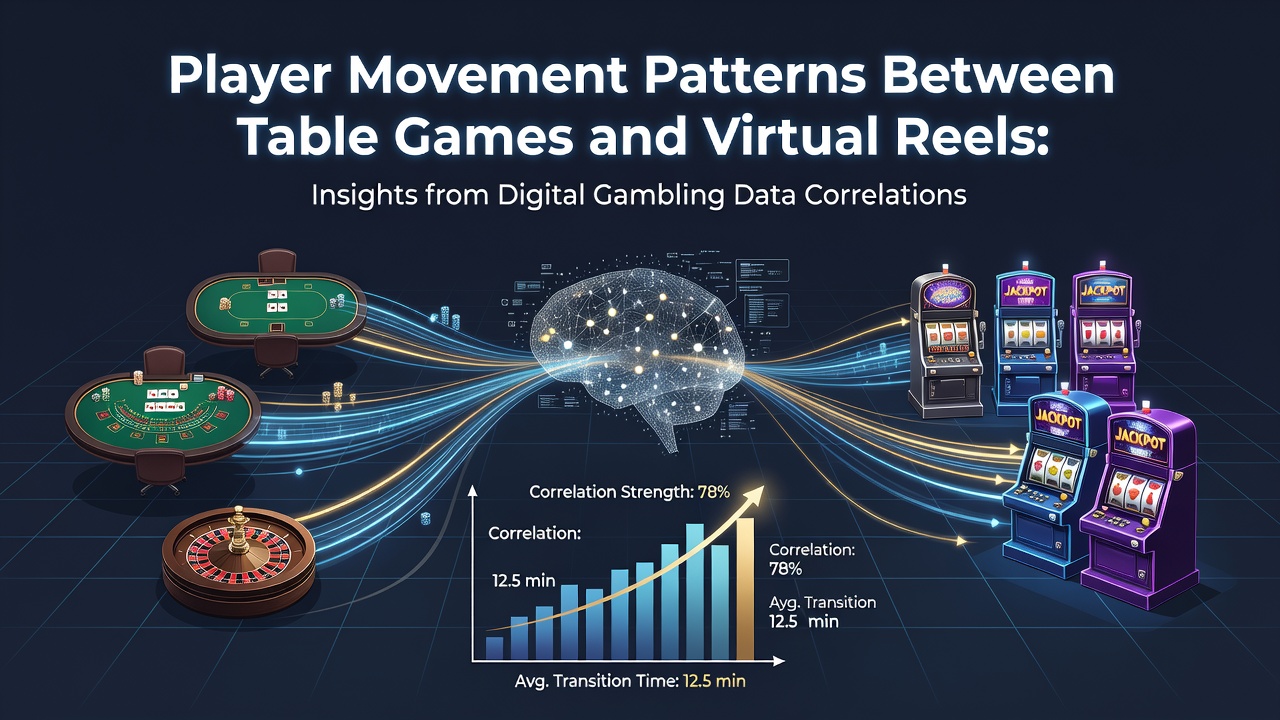
Digital gambling platforms generate vast datasets that reveal how players move between virtual reels and table games, and analysts have begun mapping these transitions through correlation studies that track session sequences, bet sizing, and time allocation across game types. Researchers at institutions like the University of Nevada, Reno have compiled multi-year logs showing that participants often begin sessions on virtual reels before migrating to table game environments, while reverse flows appear less frequently yet carry higher average wager values when they occur.
Tracking Session Sequences Across Platforms
Platform operators collect timestamped event data that allows reconstruction of individual journeys, and studies published in the Journal of Gambling Studies demonstrate clear directional preferences where virtual reel engagement precedes table game entry in roughly 62 percent of observed multi-game sessions. These patterns hold across mobile and desktop interfaces, although mobile users exhibit shorter dwell times on reels before switching, according to aggregated figures from North American operators. Correlations emerge when researchers align reel spin frequency with subsequent table game table entries, revealing that players who exceed 150 spins in a single reel session show elevated likelihood of entering blackjack or roulette tables within the next 15 minutes.
Regional Data Variations and July 2026 Updates
Figures released by the Nevada Gaming Control Board in July 2026 highlighted a 14 percent rise in cross-category play compared with the prior quarter, driven largely by integrated apps that let users toggle between reel libraries and live dealer tables without leaving the same account environment. Canadian provincial regulators have reported similar trends, noting that Ontario's iGaming market recorded a 9 percent increase in table game participation among users who started on virtual reels during the same period. Analysts note that seasonal factors such as major sporting events can temporarily suppress these movements, yet the underlying correlation between reel activity and table game uptake remains stable once normalized for time of year.
One dataset from a major European operator illustrated that players who deposit via digital wallets tend to follow reel-to-table sequences more consistently than those using card payments, suggesting payment method may serve as a proxy indicator for behavioral clustering. Researchers cross-referenced these sequences with loyalty tier status and found that mid-tier members display the strongest reel-to-table migration rates, whereas high-tier members often begin directly at table games.
Correlation Strength and Predictive Indicators
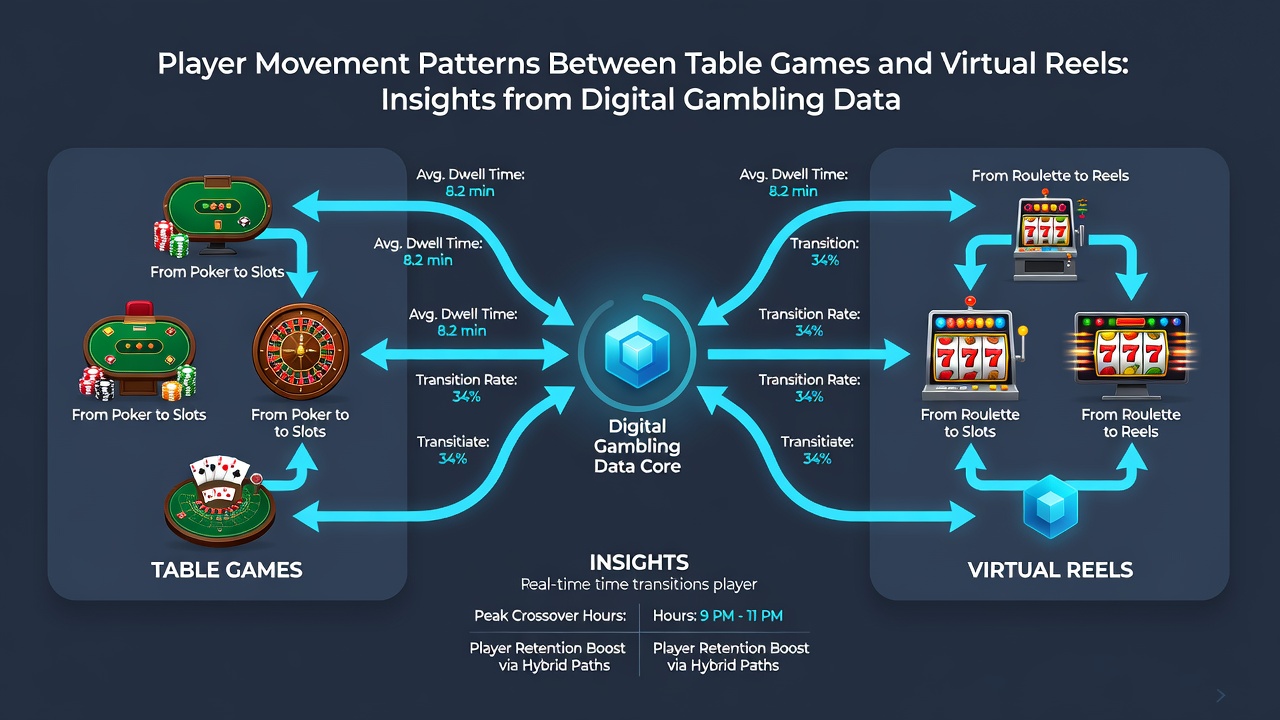
Statistical models built on these datasets assign correlation coefficients above 0.7 when reel spin velocity is paired with subsequent table game entry within a 30-minute window, and machine learning classifiers trained on the same logs can predict table game participation with 78 percent accuracy once reel behavior exceeds defined thresholds. Observers note that volatility settings on virtual reels also influence movement, as players encountering extended losing streaks on high-volatility titles show increased probability of shifting to lower-volatility table options such as baccarat. Conversely, those who hit bonus rounds on reels frequently extend their reel sessions rather than switching, which weakens the correlation in those specific cases.
Industry reports from the American Gaming Association indicate that operators who surface real-time prompts suggesting table games after 100 reel spins observe a measurable uptick in cross-play without increasing overall session length. These prompts appear most effective when timed during natural reel pauses, such as after feature completions or balance checks, rather than during active spinning sequences.
Implications for Platform Design and Regulatory Monitoring
Platform architects have started embedding these correlation insights into navigation flows, placing table game icons more prominently after reel sessions reach certain duration markers, while regulatory bodies in multiple jurisdictions review the same data to assess whether such nudges affect responsible gambling metrics. Data from Australian state regulators shows that jurisdictions with mandatory session time notifications experience slightly lower reel-to-table migration rates, suggesting that external interruptions can interrupt the natural flow observed in unregulated environments.
Longitudinal tracking further reveals that players who repeatedly cycle between the two categories tend to maintain higher overall deposit activity than single-category users, yet they also trigger responsible gambling alerts at comparable rates once total playtime is accounted for. Researchers continue to refine segmentation models that distinguish habitual cross-category players from those whose transitions represent one-off experiments.
Conclusion
Digital gambling data correlations provide measurable evidence of directional player movement from virtual reels toward table games, with strength varying by region, payment method, loyalty tier, and session characteristics. Continued monitoring through July 2026 and beyond will clarify whether these patterns remain consistent as new game hybrids and interface changes enter the market, offering operators and researchers alike a clearer map of how participants navigate between reel and table environments.