26 Jun 2026
Data-Driven Player Incentives: How Analytics Refine Bonus Structures Across Mobile Slots and Live Table Formats
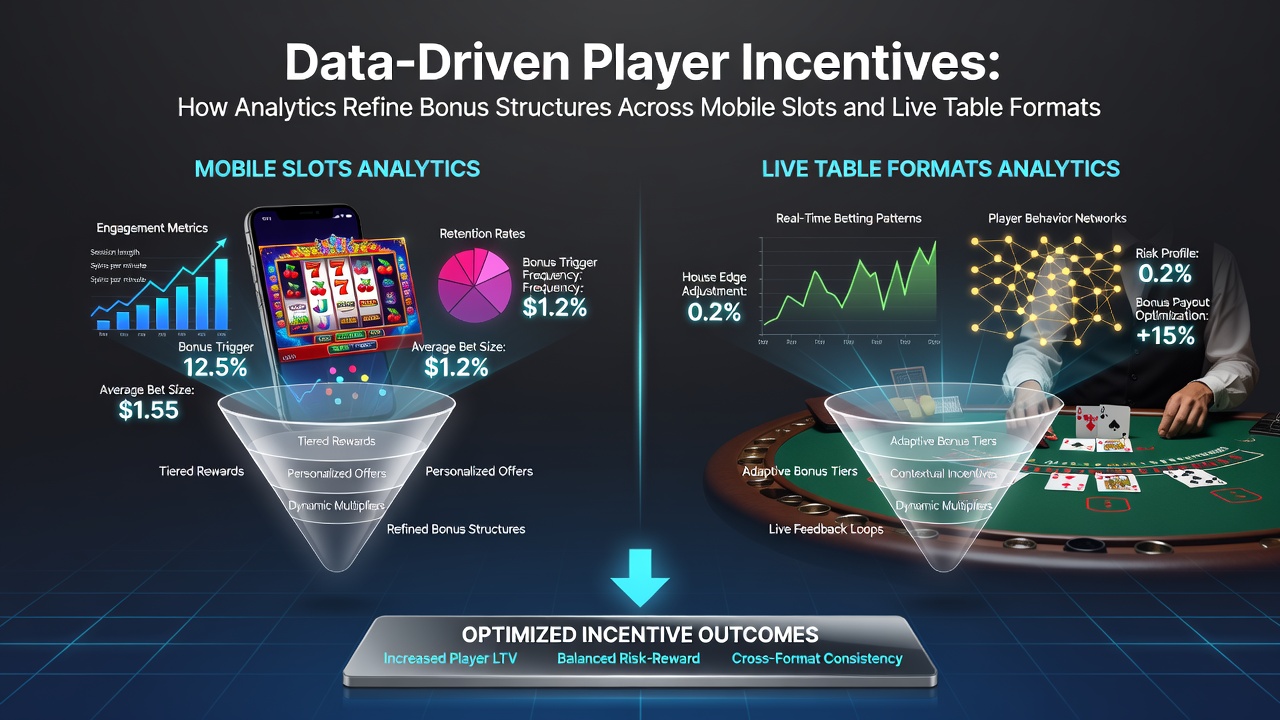
Operators across mobile slots and live table formats now rely on detailed analytics to shape bonus structures that respond directly to player behavior patterns, and this approach has accelerated through 2026 as platforms collect real-time metrics on session length, bet frequency, and game selection.
Analytics Foundations in Modern Gaming Platforms
Research from the American Gaming Association shows that integrated data systems track thousands of variables per player, including deposit timing, withdrawal patterns, and preferred volatility levels, which allows operators to segment audiences into precise groups rather than applying uniform rewards. Those segments receive tailored incentives such as free spin multipliers for slots players who favor high-volatility titles or extended play credits for table game users who maintain steady bet sizes across multiple rounds.
Live dealer environments add another layer because platforms capture additional signals like chat interaction rates and camera engagement time, and these elements feed into models that adjust cashback percentages or loyalty point multipliers on the fly. Observers note that such refinements reduce unnecessary expenditure on broad promotions while increasing retention among specific cohorts who respond to targeted offers.
Refinements Specific to Mobile Slots
Mobile slots present unique data opportunities because session data arrives in granular bursts tied to reel spins, feature triggers, and bonus round completions, and analysts use these inputs to calibrate deposit-match percentages or daily login rewards that align with individual play rhythms. For instance, one major operator adjusted its weekly reload bonuses in early 2026 after reviewing six months of spin-volume statistics, which revealed that certain player clusters completed more sessions when offered smaller but more frequent top-ups instead of larger weekly sums.
Volatility preferences also influence structure design since data indicates low-volatility enthusiasts often extend play after receiving incremental free spins that keep the reels moving without large risk spikes, whereas high-volatility seekers show stronger engagement when bonuses unlock access to premium feature rounds. These distinctions emerge clearly from aggregated datasets rather than from isolated feedback, and operators apply them to set eligibility thresholds that automatically update as new behavioral clusters form.
Adaptations Across Live Table Formats
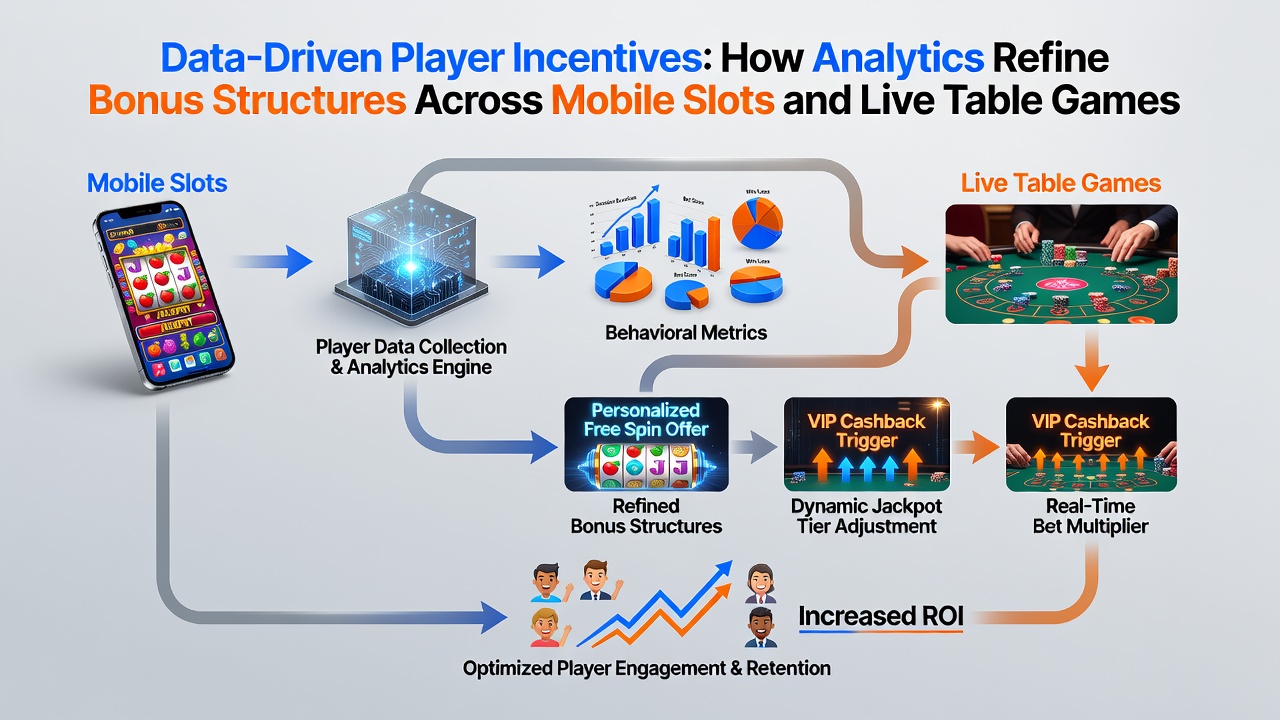
Live table formats incorporate analytics through different channels because real-time interaction data combines with historical performance records to guide incentive timing, and platforms now trigger personalized rake rebates or tournament entry credits based on tracked hand volume and average bet size over rolling periods. Data from the Responsible Gambling Council in Canada highlights how operators in regulated markets use these metrics to identify when players reach decision points that correlate with longer table sessions, allowing bonus offers to appear precisely when engagement metrics peak.
Blackjack and roulette streams generate distinct datasets around side-bet frequency and color-choice patterns, which feed separate models that refine reward frequency for each variant. Analysts report that players who consistently place insurance bets in blackjack respond differently to bonus structures than those who avoid them, and the same differentiation applies to roulette players who favor inside versus outside bets, leading to segmented offers that match observed preferences without manual intervention.
Implementation Patterns Observed Through Mid-2026
By June 2026 multiple platforms had integrated predictive models that forecast optimal bonus values for individual accounts using machine-learning outputs trained on prior campaign results, and these systems automatically scale rewards upward or downward depending on predicted response rates. Operators that adopted such automation recorded measurable shifts in average revenue per user within targeted segments while maintaining stable overall promotional budgets.
Cross-format players present additional complexity because analytics must reconcile mobile slots activity with live table sessions to avoid conflicting incentives, yet successful implementations merge the datasets into unified profiles that trigger hybrid rewards such as slots free spins paired with table-game cashback when both formats show recent activity. This convergence reflects broader industry movement toward consolidated player views rather than siloed game-type tracking.
Conclusion
Data-driven refinements continue to evolve as new variables enter the models and regulatory frameworks in multiple jurisdictions require transparent reporting of promotional mechanics. Platforms that maintain rigorous segmentation practices while respecting data privacy standards position themselves to sustain player engagement across mobile slots and live table formats without relying on generic bonus distributions.