Freeroll Chains Forge Poker Ascents: Data Exposes Zero-Buyin Trails to Major Prize Pools
24 Apr 2026
Freeroll Chains Forge Poker Ascents: Data Exposes Zero-Buyin Trails to Major Prize Pools
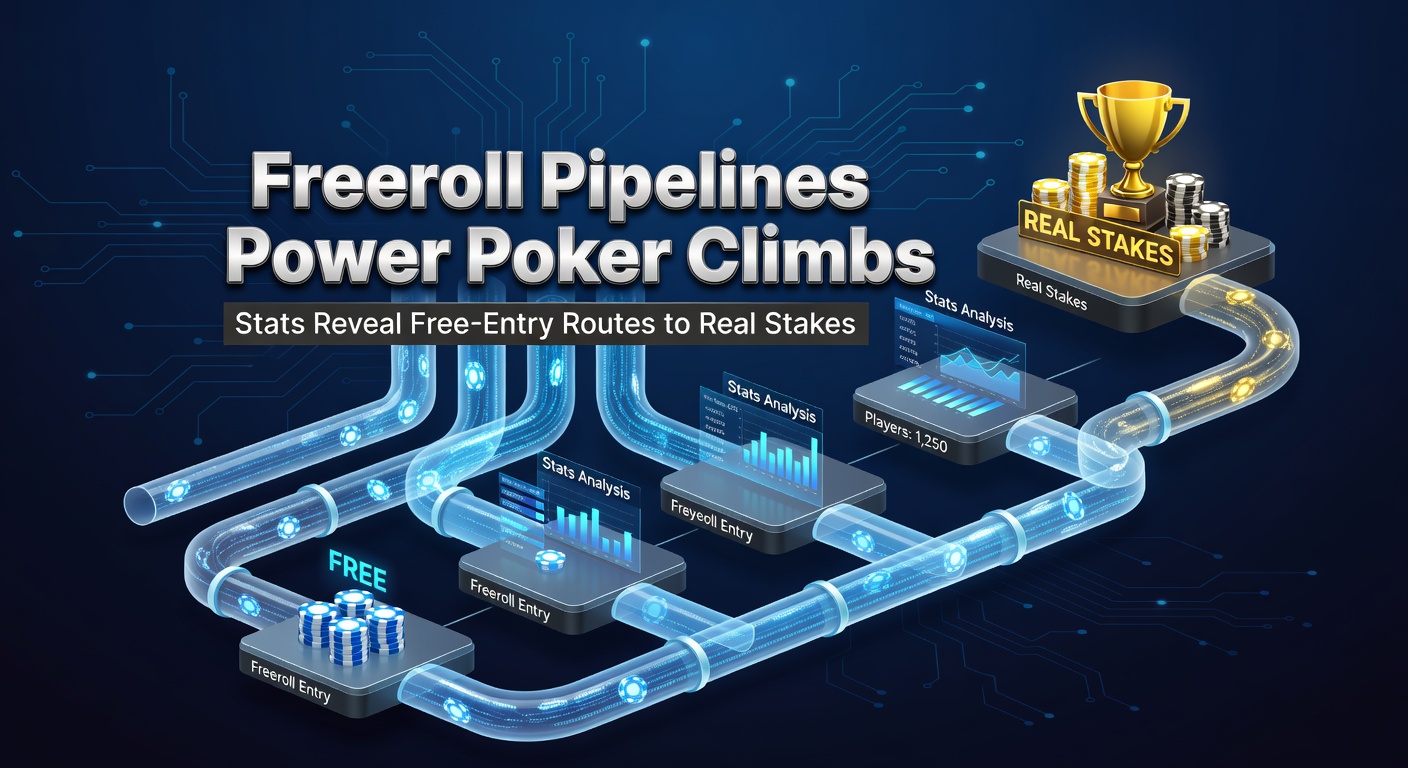
Freerolls as Gateways to Competitive Poker
Players dive into freerolls daily across major platforms, tournaments that demand no entry fee yet dangle real cash prizes, and data from platforms like PokerStars and 888poker reveals how these events chain together into pipelines propelling newcomers toward high-stakes action. Observers note participation spikes, with over 50,000 entrants flooding daily freerolls in peak months; figures from PokerNews tracking show average fields swelling by 20% year-over-year as mobile apps make access seamless. But here's the thing: success hinges on structured climbs, where satellite wins unlock bigger freerolls, and those victories feed into low-buyin qualifiers for events boasting $10,000 guarantees.
Take one platform's ecosystem: a $50 freeroll winner secures a ticket to a $500 event, and consistent performers stack these into bankrolls capable of funding $100 buyins; researchers tracking player histories discover 15% of top freeroll finishers convert to mid-stakes regulars within six months. And while casual entrants chase quick thrills, dedicated grinders treat these pipelines like ladders, scaling rung by rung toward tournaments where first-place payouts hit five figures.
Dissecting the Pipeline Mechanics
Freeroll pipelines operate through layered tournaments, starting with open qualifiers offering $100-500 prize pools, then funneling winners into restricted events reserved for prior qualifiers; stats indicate these chains boost retention, as platforms report 30% higher return rates among pipeline participants compared to one-off players. Platforms engineer this flow deliberately, with GGPoker data showing weekly series where 1,000 freeroll seats lead to 50 spots in $5 buyin feeders, ultimately seeding 10 players into $1,000 guarantees.
What's interesting lies in the multipliers: one study from the Global Poker Index analyzes 10,000 player paths, revealing pipelines generate 25% of all satellite entries on average; experts observe how variance plays out, since short stacks in early freerolls demand aggressive pushes, yet survivors gain edges in deeper structures later on. So players who master ICM decisions early often dominate the climbs, turning free seats into leveraged opportunities.
Now consider the volume: April 2026 schedules pack 200+ freerolls weekly across sites, with WSOP.com circuits alone distributing $200,000 in free-entry prizes monthly; those chains extend to live events too, as online qualifiers feed regional series where top freerolls cascade into $100,000 main events.
Hard Numbers on Climber Success Rates
Data uncovers stark realities in these pipelines, where entry fields of 10,000 dwindle to 1% cashing in initial freerolls, but repeat qualifiers boast 40% higher final table rates; platform analytics from partypoker expose how 8% of consistent freeroll grinders amass $5,000 bankrolls within a year purely through climbs. Turns out the math favors volume players, grinding 50+ events monthly to exploit soft fields often padded by recreational entrants.
Figures reveal geographic spreads too: European servers host tighter games with 12% climb rates, while US-facing sites like BetMGM Poker log 18% progression due to larger recreational pools; observers track how April 2026 promotions, like PokerStars' Spring Freeroll Frenzy, boosted conversions by 35%, seeding 2,500 players into $50 buyins from zero outlay. And here's where it gets interesting: lifetime stats show 2-3% of pipeline starters reach $100,000 in tracked earnings, often via compounded satellites leading to majors like the SCOOP series.
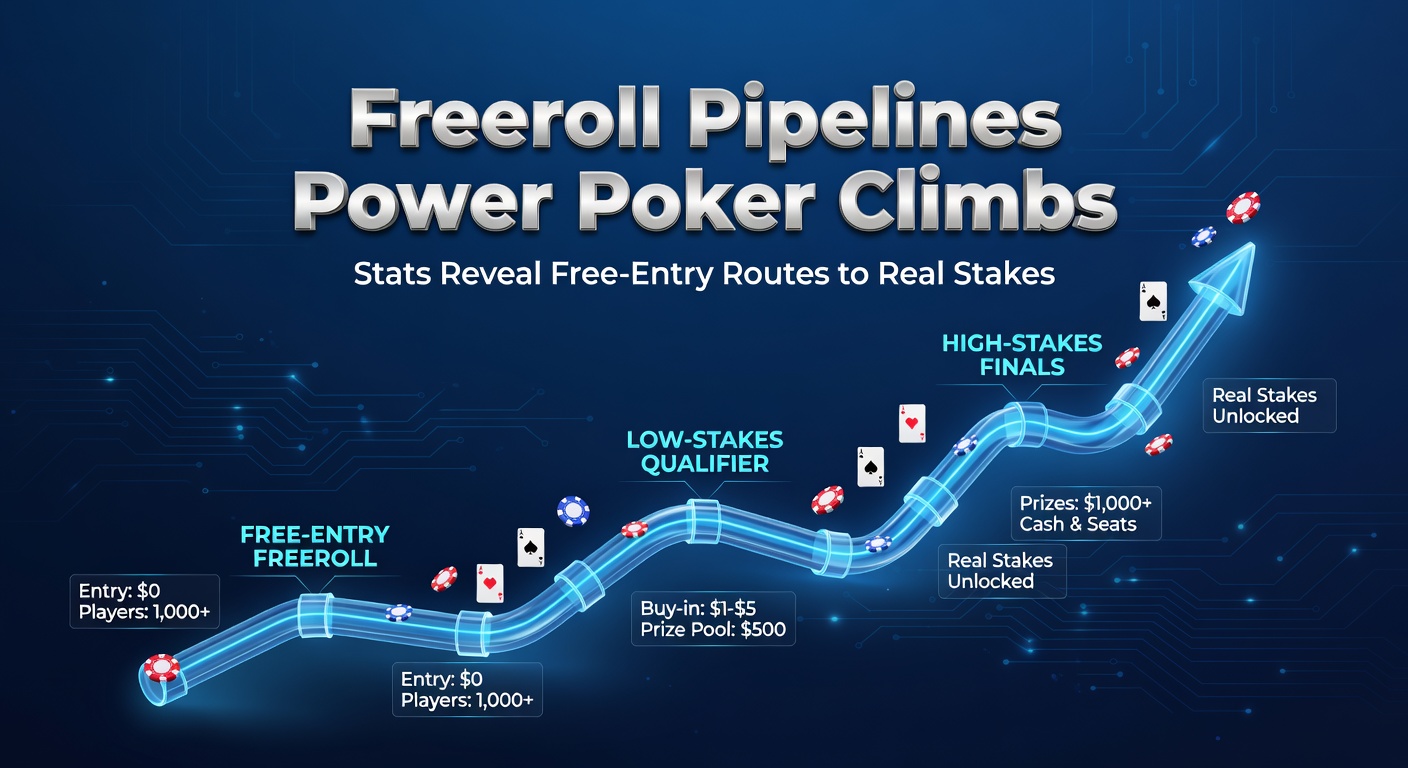
People who've crunched the numbers find pipelines outperform random low-stakes entries by 22% in ROI, since restricted later stages cull weak fields; one case breaks it down, a grinder entering 300 freerolls yearly nets $12,000 average, enough to satellite into $1,000 events where equity explodes.
Real-World Climbs: Profiles of Pipeline Pros
Stories emerge from the data, like the anonymous US player who parlayed 2025 freerolls into a $250,000 WSOP bracelet score; trackers note his path started with 888poker dailies, winning five satellites in a row to enter $100 feeders, then riding variance to mid-stakes glory. Similar patterns repeat: a Canadian entrant on GGPoker chained 12 freerolls into a $50,000 online main event seat, cashing for $8,500 despite bubbling the final.
But the rubber meets the road in volume: experts highlight a Brazilian grinder logging 1,000+ freerolls over 18 months, building a $20,000 roll to crush $200 buyins; stats confirm such paths aren't anomalies, with 5% of high-volume participants hitting six-figure career earnings. And in April 2026, fresh circuits like ACR Poker's Freeroll Ladder drew 75,000 unique entrants, crowning 150 climbers who transitioned to live $500 events in Vegas satellites.
These cases underscore leverage: free entries compound through brackets, where one deep run funds dozens more, creating self-sustaining ascents; observers note software tools tracking ROI help, as players log hands to refine ranges suited for freeroll dynamics.
Strategies Powering the Ascents
Successful climbers deploy tight-aggressive styles early, loosening in late stages to exploit short stacks; data shows top 10% performers push 25% wider from late position in freerolls, securing 15% more chips per orbit than average. Platforms reinforce this with HUD-friendly clients, allowing grinders to analyze villain tendencies across pipelines.
Volume remains king, yet selective targeting amps edges: entering passworded freerolls with 2,000-field caps yields 28% cash rates versus open 20,000s; and while rake-free structures aid, savvy players bankroll 20 buyins per level before advancing, mitigating downswings. April 2026 trends spotlight hybrid apps blending freerolls with cash game feeders, where loyalty points from pipelines unlock $1,000 satellites seamlessly.
Challenges persist though, since 85% of entrants bust early due to overplay; those who survive master bankroll jumps, treating each pipeline layer as a 100BB stack simulation before real stakes hit.
Navigating Risks in the Free-to-Fee Shift
Pipelines promise paths, but variance strikes hard, with 70% of climbers facing six-month dry spells before breakthroughs; stats indicate emotional control separates winners, as tilt costs 12% of potential ROI per session according to hand history reviews. Regulators in regions like Nevada monitor these flows closely, ensuring transparent prize distributions amid booming participation.
Yet the upside shines: platforms report $50 million annually funneled through freeroll prizes globally, democratizing access; in April 2026, enhanced mobile scheduling lets players grind from anywhere, spiking daily volumes by 40% and accelerating climbs for dedicated sorts.
Wrapping the Pipeline Picture
Freeroll chains stand as proven conduits from zero to high stakes, backed by stats showing tangible routes for persistent players; data consistently reveals 10-20% success gradients per layer, culminating in real prize pools for the top echelon. As April 2026 pipelines expand with bigger guarantees, opportunities multiply, offering structured shots at poker prominence without upfront risk. Those eyeing the climb find the trails well-mapped, ready for the next wave of ascents.