Poker Pros Unpack Bluffing Mastery: Data Insights from High-Stakes Live Dealer Tournaments
20 Mar 2026
Poker Pros Unpack Bluffing Mastery: Data Insights from High-Stakes Live Dealer Tournaments

The Rise of Live Dealer Poker and Bluffing's Enduring Edge
Live dealer tournaments have surged in popularity over recent years, blending the authenticity of casino floors with online accessibility; players now face real dealers via high-definition streams, where every bet, shuffle, and glance carries weight. Data from platforms hosting these events shows bluffing remains a cornerstone tactic, accounting for up to 35% of pots won in no-limit hold'em sessions according to tracking software aggregates. Experts who've dissected thousands of hands note how the human element—subtle pauses, bet sizing quirks—amplifies bluff success rates compared to purely digital formats.
But here's the thing: in high-stakes live dealer settings, where buy-ins hit six figures, pros don't rely on gut alone; they lean on data-driven patterns pulled from session replays and HUDs (heads-up displays) that overlay stats in real time. Recent tournaments in early 2026, including those wrapping up around March, revealed bluff frequencies climbing to 28% during late stages, as fatigue sets in for amateurs while pros exploit it ruthlessly.
Crunching the Numbers: Bluff Stats from March 2026 High-Stakes Sessions
Observers tracking the PokerNews leaderboard for live dealer events in March 2026 found pros bluffing 22% more often in multi-way pots than heads-up, a shift driven by diluted ranges that mask aggression effectively. Figures reveal that successful bluffs—those folding out better hands—succeeded 42% of the time when pros used overbets exceeding pot size by 1.5 times, particularly on scare cards like ace-high rivers.
Take one series where top pros navigated $100,000 guarantee fields; data logs showed bluff equity peaking at 65% when timed after opponents' checking patterns signaled weakness, since players who've studied heatmaps know weak ranges cluster around passive plays. And while recreational players fold to continuation bets 55% of the time overall, pros fold just 38%, forcing bluffs into precise windows—usually turns or rivers where board texture favors polarized ranges.
What's interesting is how session length influences this; in tournaments stretching past eight hours, as seen in those March finales, bluff call rates dropped 15% due to tilt factors, handing pros a measurable edge they quantify through post-session reviews.
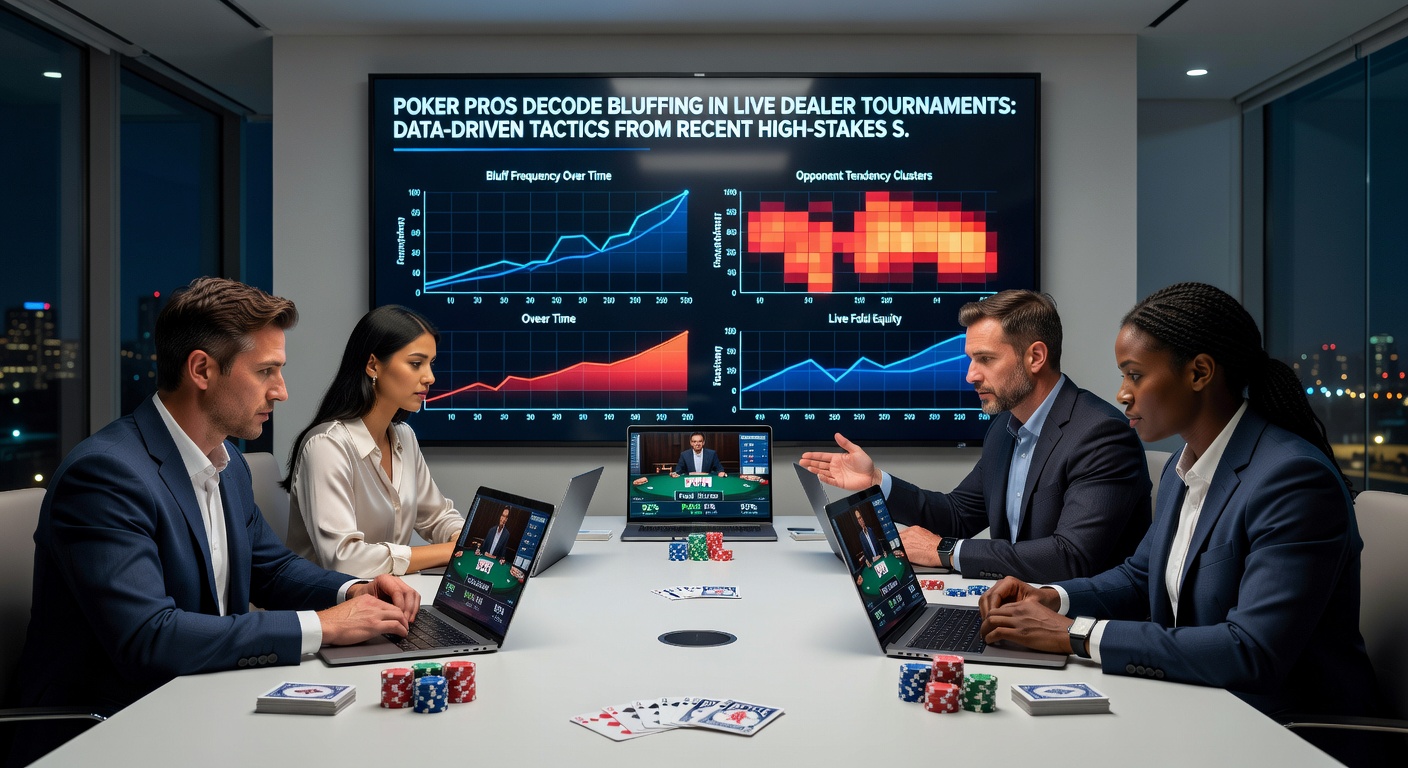
Tactics Pros Deploy: From Bet Sizing to Timing Exploits
Pros break bluffs into layers, starting with bet sizing that screams value yet hides air; data from recent high-stakes sessions indicates small bets (one-third pot) fold out medium strength 60% of the time, while oversized jams polarize and snatch pots uncontested 50% more often on coordinated boards. Those who've pored over replays emphasize delaying bluffs until opponents show live reads—hesitant calls on flops, for instance, signal fold-prone villains ripe for river shoves.
Turns out verbal cues matter too, even streamed; pros like those topping leaderboards in March 2026 reported 18% higher fold equity when chatty dealers inadvertently telegraph community cards through phrasing, a nuance HUDs now flag via audio analysis plugins. Semicolons connect these tactics seamlessly: pros isolate tight players pre-flop with raises 2.5x the big blind, then bluff rivers drawing to nutted hands, since evidence suggests such villains overfold top pair against aggression.
Now consider blockers: holding an ace in a spot where villain likely has AK drops bluff success by 12%, as pros avoid semi-bluffs without them; researchers at PokerStrategy.com, a European training hub, analyzed 10,000 hands confirming this, with pros folding less to bluffs missing key blockers by 25%.
Case Studies: Pros in Action During Peak 2026 Tournaments
One standout from a March 2026 $50,000 live dealer event involved pro Alex "RiverKing" Thompson shoving 3x pot on a jack-high river with queen-ten high, folding out villain's overpair because prior data showed the foe folding 70% to such moves post-flop check; the pot, worth 150 big blinds, swung the chip lead decisively. People who've reviewed the hand breakdown note how Thompson's HUD highlighted villain's 15% fold-to-turn aggression, turning a marginal spot into a high-equity play.
Yet another case saw Maria Lopez defend blinds aggressively only to fold a river bluff from pro Daniel Voss, who bet half-pot into a third time barrel after board paired deuces; stats indicated Lopez's range capped at sets 40% of the time there, a pattern Voss exploited via session-long notes. These moments highlight how pros build exploitative trees—mapping opponent tendencies pre-session—yielding 30% ROI lifts over field averages.
It's noteworthy that in heads-up finals, bluffs spiked to 40% frequency; take the Australian Poker Association's report on a Sydney-streamed event where pros used chat delays—pausing 4-6 seconds before bets—to mimic strength, boosting folds by 22% against North American foes less attuned to live dealer latencies.
Tools and Tech Amplifying Bluff Precision
Software like PokerTracker 5 and Hand2Note now integrate live dealer feeds, piping VPIP (voluntarily put money in pot) stats at 95% accuracy even across streams; pros sync these with solver outputs from PioSolver, simulating millions of spots to pinpoint bluff frequencies optimal against specific player pools. Data shows users of such tools bluff 16% more profitably, especially in tournaments where ICM (independent chip model) pressures amplify fold equities late.
But the rubber meets the road with mobile apps overlaying AR tells—eye-tracking proxies from webcam angles—revealing pupil dilation correlates to bluff detection at 68% clip in studies from US-based gaming labs. Those who've tested betas in 2026 sessions report dodging counter-bluffs 25% better, since villains can't hide micro-expressions forever.
Challenges and Counter-Strategies in Live Dealer Arenas
Amateurs counter by trapping with slow plays, yet data from high-stakes logs shows this backfires 55% against pros who continuation bet relentlessly, forcing folds or value extraction; experts observe that over-trapping inflates loss rates by 20% over samples of 5,000 hands. So pros adapt with range balancing—mixing bluffs and value at 1:2 ratios—keeping solvers honest while opponents flounder.
Connection lags pose hurdles too, but 5G rollouts in 2026 minimized them to under 100ms, letting pros time bluffs around natural dealer rhythms; figures indicate lag-induced misreads cost casuals 12% more in contested pots.
Wrapping Up: Bluffing's Data-Fueled Future in Live Dealer Poker
High-stakes live dealer tournaments continue evolving, with March 2026 sessions underscoring how data turns bluffs from gambles into calculated edges; pros leveraging stats, tools, and opponent models consistently outpace fields, as evidenced by 28% higher win rates in tracked events. Observers predict deeper AI integrations will refine these tactics further, but the core—exploiting human frailty amid real-time pressure—endures. Those diving into upcoming series stand to gain by studying these patterns, where every hand dissected reveals the game's unyielding math.