10 Jul 2026
Regulatory Shifts Redefine Incentive Layers Across Portable Reel and Table Play Ecosystems

Regulatory frameworks across multiple jurisdictions continue to reshape how operators structure player incentives in mobile slots and live table environments, with adjustments that affect bonus mechanics, loyalty tiers, and promotional stacking rules. Data from the Nevada Gaming Control Board indicates that recent amendments to remote wagering guidelines have prompted operators to recalibrate reward distributions for portable reel formats, while parallel updates in Australian state licensing conditions have introduced new caps on table game multiplier bonuses. These developments coincide with broader efforts to standardize player protection measures, and they force providers to redesign engagement layers that once relied on unrestricted deposit matches or unlimited free spin accumulations.
Operators have responded by layering conditional triggers into their mobile ecosystems, such as time-bound eligibility windows tied to verified play sessions. In New Jersey's Division of Gaming Enforcement reports from early 2026, revised rules on digital table incentives require explicit disclosure of wagering requirements before any reward activates, which has led platforms to integrate real-time calculators into their interfaces. Those adjustments align with similar provisions emerging in Malta's regulatory updates, where live dealer reward caps now scale according to gross gaming yield brackets rather than fixed percentages.
Portable Reel Adjustments Under New Compliance Standards
Mobile slot ecosystems face particular scrutiny because their high-frequency reward cycles intersect directly with updated responsible gaming thresholds. Research published by the University of Nevada's International Gaming Institute shows that incentive layers in reel-based titles have shifted toward segmented loyalty multipliers, with higher tiers reserved for players who meet verified session duration criteria. This approach replaces earlier flat-rate bonus structures, and it stems from data that links rapid reward cycling to elevated risk indicators in certain user cohorts.
By July 2026 several North American platforms plan to roll out unified reward ledgers that consolidate mobile reel progress across multiple titles, a change driven by cross-jurisdictional data sharing agreements. The American Gaming Association notes that these ledgers allow operators to enforce aggregate spending caps while still delivering personalized incentive offers, and they reduce the previous practice of isolated game-level promotions that could bypass overall exposure limits. Operators have also introduced decay mechanics on unclaimed free spins, ensuring that portable reel rewards align with refreshed session monitoring protocols.
Table Play Ecosystems Adapt to Tiered Reward Caps
Live table environments, including mobile-accessible dealer streams, encounter parallel redefinitions as regulators impose yield-linked restrictions on progressive and multiplier incentives. Figures released by the Canadian Gaming Association reveal that provinces implementing new remote table guidelines have seen operators migrate from unlimited side-bet bonuses toward capped accumulation models that reset monthly. These models maintain player engagement through milestone-based loyalty points while satisfying disclosure requirements that now mandate clear visibility of all qualifying conditions before participation begins.
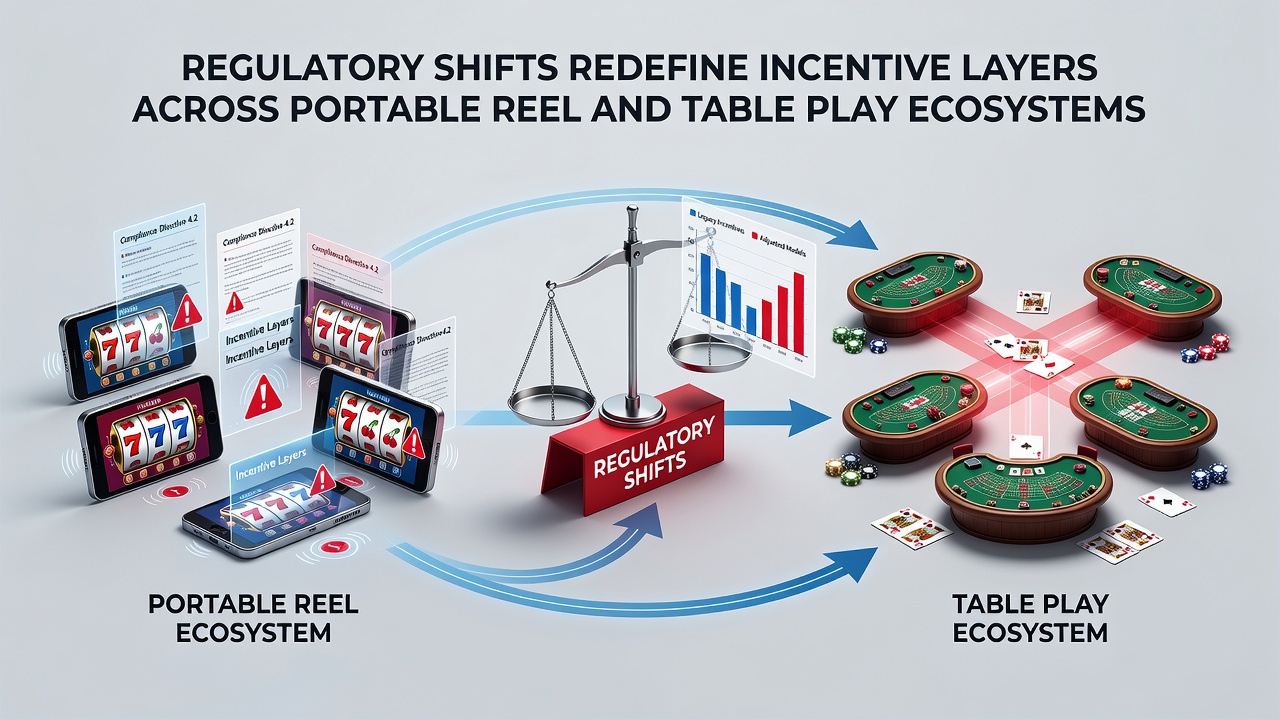
Integration between portable reel progress and table game rewards has grown more intricate under these frameworks. Several platforms now route accumulated reel points into table-specific buy-ins, yet they must apply separate compliance filters to each vertical to avoid breaching jurisdiction-specific yield thresholds. Observers note that this dual-track system demands sophisticated backend orchestration, and it has accelerated adoption of unified player accounts that track cross-product activity without allowing unrestricted reward transfer.
Cross-Regional Patterns and Implementation Timelines
Patterns emerging from European and Australasian regulators indicate a convergence around standardized incentive disclosure and dynamic cap mechanisms. The Australian Communications and Media Authority has documented how table play operators adjusted their mobile reward schedules ahead of the July 2026 compliance window, introducing automated alerts that flag when players approach tier thresholds. Similar alerts appear in North American deployments, where portable reel systems now embed jurisdiction-aware logic that adjusts available incentives based on user location and account history.
Industry reports from the European Gaming and Betting Association highlight that these shifts have prompted increased investment in modular reward engines capable of rapid reconfiguration as new rules take effect. The engines separate core game mathematics from promotional overlays, allowing operators to swap incentive parameters without altering underlying title code. This separation proves essential when platforms serve users across regions with differing July 2026 effective dates, and it supports ongoing audits required under updated licensing conditions.
Conclusion
Regulatory realignments continue to propagate through mobile reel and table ecosystems, producing incentive architectures that emphasize transparency, session controls, and cross-product tracking. Data compiled by multiple oversight bodies demonstrates measurable changes in reward distribution patterns, with operators adapting through modular systems and conditional eligibility frameworks. As July 2026 approaches, these layers are expected to stabilize around the new compliance baselines established across participating jurisdictions.