UK Online Slots Defy Stake Limits with Surging Activity, Gambling Commission Data Shows
UK Online Slots Defy Stake Limits with Surging Activity, Gambling Commission Data Shows

Fresh Data Drop from the Gambling Commission
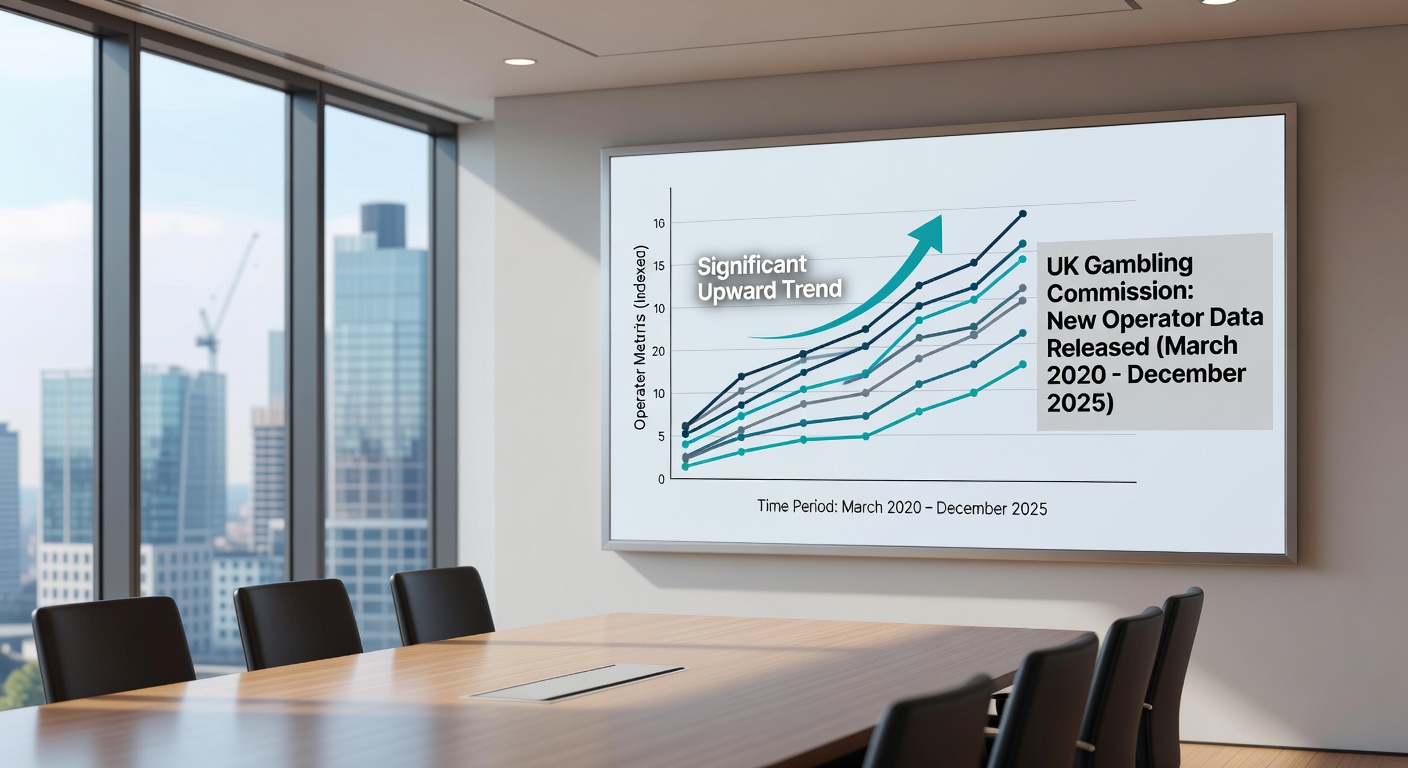
The UK Gambling Commission just unveiled its latest operator data spanning March 2020 through December 2025, painting a picture of resilience in the online slots sector even as new stake restrictions kicked in during 2025; figures reveal growth across key metrics, although shifts in player behavior emerge clearly in the numbers.
Published in February 2026, this dataset—covering the period up to the end of last year—offers operators, regulators, and observers a snapshot of how the market adapted to regulatory changes, with slots standing out as a powerhouse amid broader gambling trends.
And here's where it gets interesting: despite the introduction of £5 maximum stakes per spin for adults aged 25 and over starting April 9, 2025, followed by £2 limits for 18- to 24-year-olds from May 21, online slots activity didn't just hold steady—it climbed.
Gross Gambling Yield Hits New Heights
Slots Gross Gambling Yield (GGY) for Q3 of the fiscal year 2025/26 soared 10% year-on-year to £788 million, according to the commission's market overview; this surge underscores the sector's robustness, even under tighter controls that aimed to curb potential harm.
Total spins reached 25.7 billion in that quarter, marking a 7% increase from the prior year, while average monthly active accounts grew 5% to 4.6 million—numbers that highlight sustained player engagement across demographics.
Observers note how these gains materialized post-stake limits, suggesting players adjusted strategies rather than abandoning the games; take one breakdown where daily spins per active account held firm, indicating frequency trumped higher wagers.
But the data doesn't stop at topline growth; it dives deeper into usage patterns, revealing nuances that regulators watch closely.
Stake Limits Roll Out: Timeline and Impact
The phased implementation began with the £5 cap for over-25s on April 9, 2025, targeting higher-stakes play among experienced users, then extended to £2 for younger adults over a month later on May 21—moves designed to protect vulnerable groups while preserving access.
Yet, as Q3 data confirms, GGY climbed to that £788 million peak, spins ballooned to 25.7 billion, and active accounts hit 4.6 million monthly averages; this resilience prompts questions about adaptability, with experts pointing to shorter, more frequent sessions as a key factor.
People who've analyzed similar reforms often find that lower limits can paradoxically boost volume, since players spin more often to chase thrills—exactly what the numbers suggest here, where total activity expanded despite per-spin reductions.
What's significant is the timing: these metrics cover the initial months after limits landed, offering early evidence on real-world effects as March 2026 discussions heat up around long-term monitoring.
Shifts in Session Behavior Signal Change
Long sessions exceeding one hour dropped sharply by 16% to 8.9 million, while average session length shortened to 16 minutes—a trend that aligns with stake curbs encouraging quicker play rather than prolonged exposure.
Data indicates this pullback in extended play could reflect safeguards working as intended, since fewer marathon sessions mean less time at risk; that said, the uptick in overall spins and accounts shows the market didn't shrink— it transformed.
Turns out, active accounts rising to 4.6 million monthly suggests broader participation, perhaps drawing in casual users who favor bite-sized spins under the new caps; researchers who've tracked pre- and post-limit eras often discover such pivots, where volume fills the gap left by reduced stakes.
And consider the bigger picture: from March 2020's pandemic-fueled online boom through December 2025, slots evolved alongside tech and regs, with mobile dominance (noted in ancillary commission stats) fueling accessibility.
Breaking Down the Numbers: A Closer Look
- GGY: +10% to £788 million (Q3 FY2025/26)
- Spins: +7% to 25.7 billion
- Monthly active accounts: +5% to 4.6 million
- Long sessions (>1hr): -16% to 8.9 million
- Average session: 16 minutes
These figures, pulled from operator-submitted data, span the full five-plus years but spotlight Q3 for its post-limit clarity; experts observe how GGY growth outpaced spin increases, hinting at optimized operator yields even at lower stakes.
One case that stands out involves age-segmented impacts: younger players under £2 limits showed spin volume spikes, balancing the over-25s' steadier patterns—evidence that tailored rules influence behavior without halting momentum.
Now, as March 2026 brings fresh scrutiny, the commission's longitudinal view from 2020 onward equips stakeholders to gauge sustainability; it's not rocket science, but the data's on the table, showing growth amid guardrails.
Broader Context and Player Patterns
Since the stake limits landed, operators reported compliance via enhanced age verification and spin trackers, feeding into this dataset; the result? A market where 25.7 billion spins generated £788 million GGY, up 10%, even as sessions compressed.
Those who've studied gambling metrics know long-session declines like the 16% drop to 8.9 million often correlate with harm-reduction wins, although rising active accounts to 4.6 million underscore slots' enduring appeal—mobile-first, quick-hit entertainment that fits modern lives.
But here's the thing: average session lengths at 16 minutes reflect a snappier experience, potentially attracting newcomers while veterans adapt; data from the full March 2020 to December 2025 arc reveals slots' share of online GGY holding strong, defying slowdown fears.
It's noteworthy that Q3 FY2025/26 marks the first full quarter of dual limits, providing a benchmark as regulators eye extensions or tweaks in coming months.
Implications for Operators and Regulators
Operators face a landscape where yields rose despite caps, prompting investments in low-stake, high-volume games—think feature-rich slots optimized for £2-£5 spins that keep engagement high; the 7% spin surge to 25.7 billion exemplifies this shift.
Regulators, meanwhile, celebrate session shortenings as validation, with 16-minute averages and fewer hour-plus marathons signaling effectiveness; yet, the 5% active account growth to 4.6 million keeps the conversation alive on balancing access and protection.
Experts who've poured over the commission's releases point to this dataset as a turning point, where growth (GGY +10% to £788m) coexists with behavioral nudges—a model that could influence global reforms.
So, entering March 2026, the ball's in the operators' and policymakers' courts, armed with data that defies easy narratives.
Conclusion
The UK Gambling Commission's operator data to December 2025 lays bare a slots sector that's not just surviving stake limits—it's thriving, with GGY at £788 million (up 10%), spins at 25.7 billion (+7%), and accounts at 4.6 million (+5%), tempered by welcome drops in long sessions to 8.9 million (-16%) and shorter 16-minute averages.
This blend of expansion and restraint offers a factual roadmap for the road ahead, as March 2026 debates build on these insights; turns out, when limits hit, the industry spins on—smarter, faster, and under